Introduction of Bulgogi
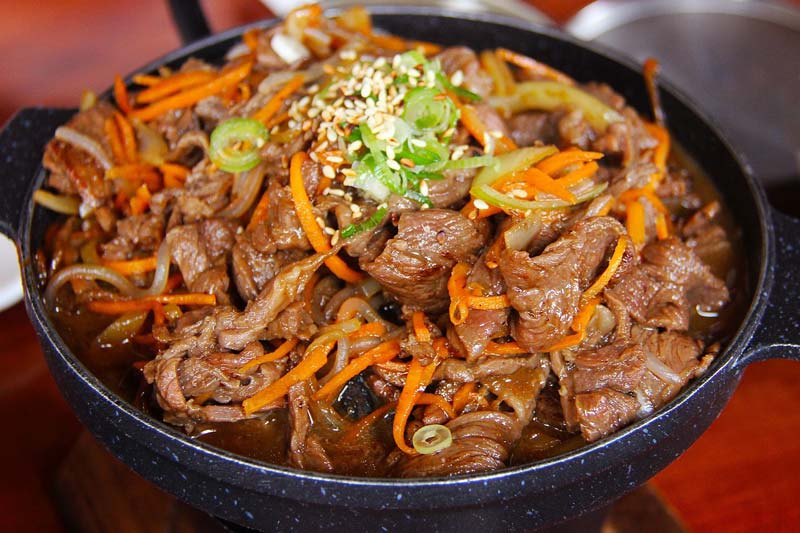
In the 1950s of Korea, some restaurants offered roast meat after cutting into thin slices, which helped shorten cooking time and make meat tender, as thick meat was generally tough and not grilled fast. Later, cooking utensil was changed from grill to pan, enabling guests to put boiled rice into beef gravy gathered on the pan. Thus, ordinary people who could not afford the expensive meat often could eat meat and rice more economically. This method of roasting meat slice on a pan has continued and expanded, which has become bulgogi of today.
Bulgogi, well known overseas
Bulgogi and Galbigui (grilled beef ribs) are the most favored foods of the Koreans. Of all the Korean dishes, perhaps bulgogi is most widely known overseas. Bulgogi not only represents Korean food but also symbolizes the food roasting culture of Korea. As bulgogi is not pungent, foreigners who experience the food first time can enjoy its taste easily. Through bulgogi, garlic and soybean paste that are the main ingredients of bulgogi condiments can be also experienced.
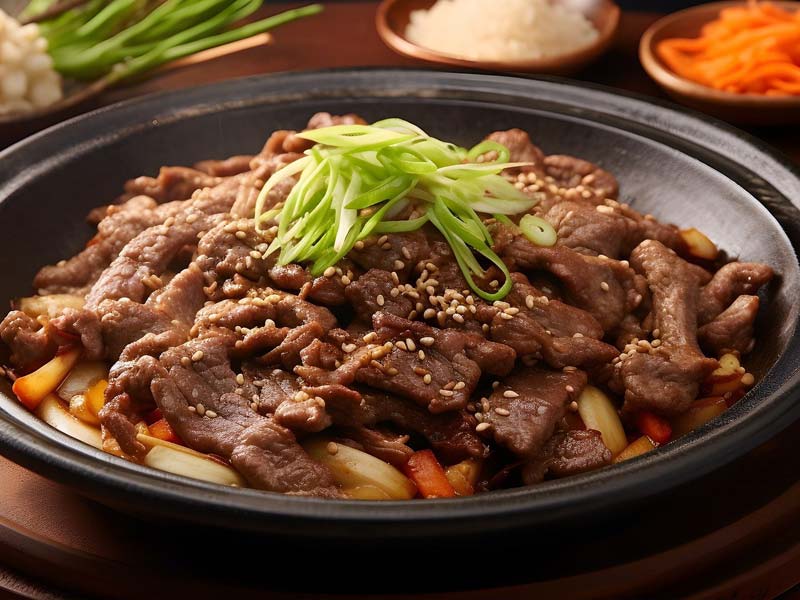
Bulgogi fot. DuckaHouse /pixabay
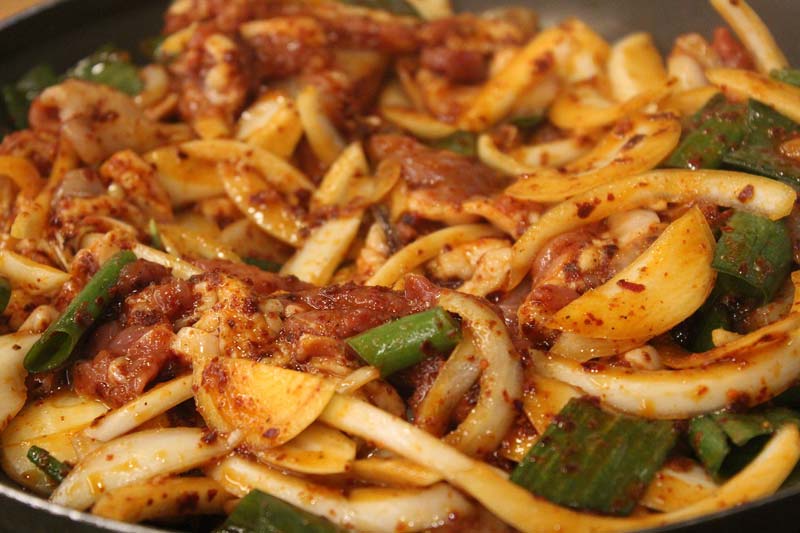
Roasting meat while seasoning them on-site is not the only way of cooking bulgogi. ‘Hot pepper paste bulgogi’ is a kind of bulgogi cooked by storing meat in hot pepper paste for some time before roasting them. In the past, there was ‘soybean paste bulgogi’ but it has faded away since the method of using hot pepper paste was introduced. Pork can be also roasted after seasoning or burying them in hot pepper paste.
Foods accompanied to bulgogi
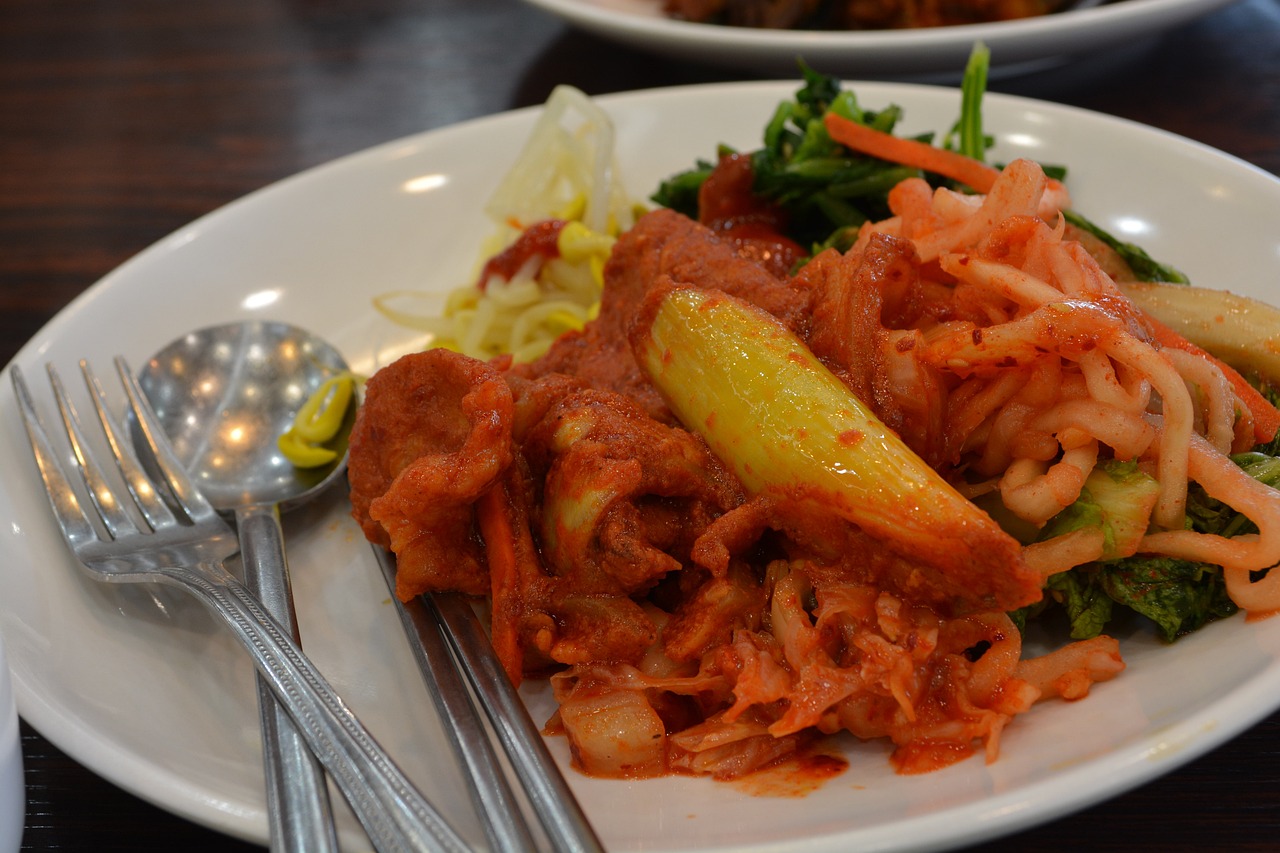
Normally bulgogi is eaten along with kimchi and ssam (wrapping in lettuce or leafy vegetable). In many cases, Korean foods are not taken as a single dish but taken together with other foods. This habit has been cultivated through long experience that certain combinations of foods, when taken together, bring about harmony and synergy effect in taste and nutrition.
To eat with ssam, bulgogi is laid on lettuce or leafy vegetable and added with a little soybean paste before wrapping and putting it into mouth. Vegetables mainly used for ssam are lettuce and green perilla, and sometimes crown daisy, dandelion and aster leaves are used.
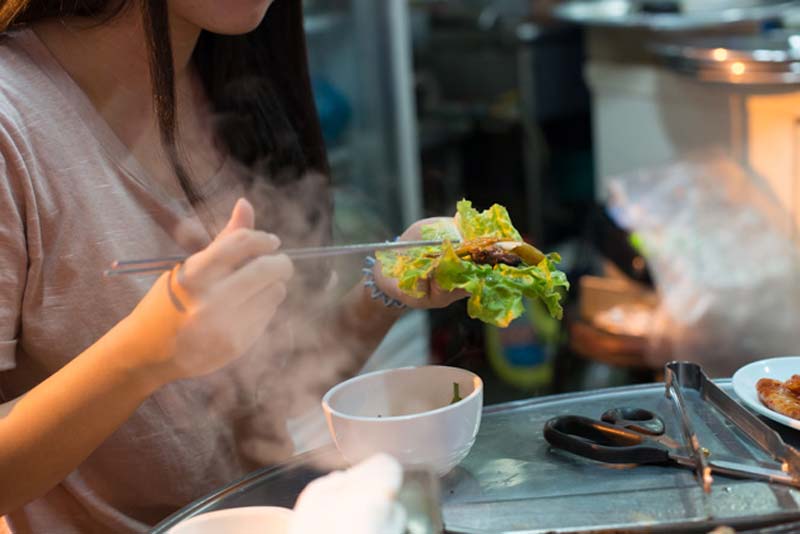
Making ssam, fot. Sous Chef / wikipedia, flickr
The custom of eating ssam is a unique culture found only in some areas of Mongolia in addition to Korea. ‘Ssamjang’ (ssam paste) has been developed not long ago, which is prepared by mixing soybean paste with hot pepper paste in a suitable proportion to generate best taste of ssam.
Taking rice, vegetables and ssam paste together with bulgogi will not only help achieve harmonized nutrition but also remove greasy taste arising from dining on meat. Besides ssam, kimchi is also a desirable side dish to accompany bulgogi, as it helps reduce fatty taste of meat.
(korfood/korfood2_1.jsp)