Bibimbap is a popular Korean dish. The word literally means “mixed cooked rice” or “mixed meal.” It is also sometimes spelled “Bibimbab” or “bibimbop.” It is served with properly cooked rice in a hot or cold bowl, topping various vegetables, meats and egg in colorful fashion. As Bibimbap contains a variety of ingredients, it is very healthy and nutritious Korean food.
Origin
There are many origins for Bibimbap. First, it was originated from the customs for partaking of sacrificial foods after sacrificial rites. Second, it was originated from way of serving interim meal for workers in the field as it was difficult to prepare meal with many dishes for many people. Therefore they used one big vessel and mixed various foods in it. Third, at lunch time in the palace, a brief meal using only one vessel was served to a member of royal family when they visited palace.
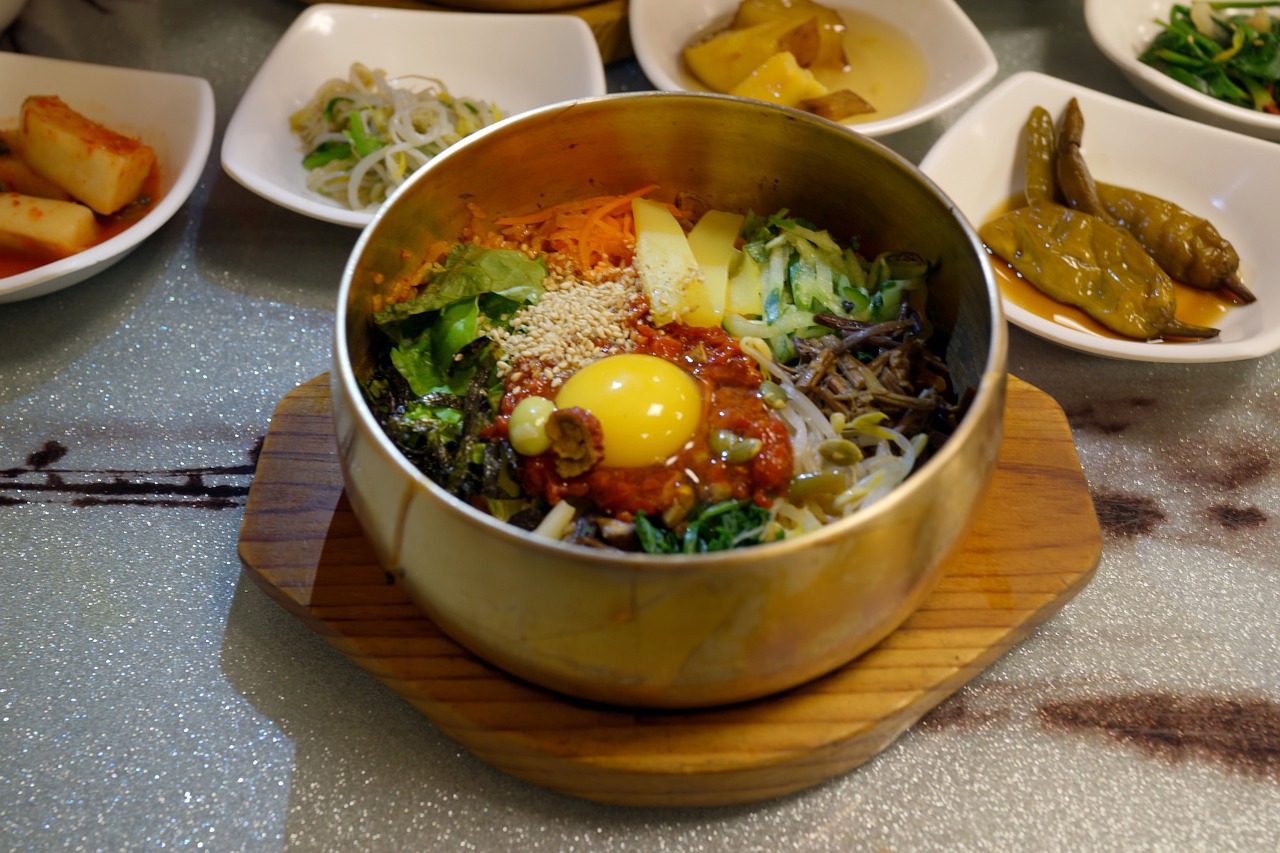
Bibimbap Jeonju fot. lovelyheewon, px
Donghak troop mixed various foods in one vessel in the field for convenience sake. And lastly on the last day of a year, people tried to finish all the left over foods by mixing the foods together and shared the food amongst family members. As such there are many interesting stories and origins related to the Bibimbap.
Jeonju Bibimbap is the most famous one and it is said that it is because of bean sprouts which is used as one of the ingredients for Bibimbap as Jeonju area is famous for the taste of bean sprouts. Bibimbap can have a variety by changing the ingredients and vegetables depending on season. One point of consideration is to try to keep good combination and harmony of nutrition and color.
Characteristics of Bibimbap
Bibimbap is a unique representative Korean food which is hard to find anywhere in the world. Whenever our ancestors felt no appetite, they put various dishes into rice together with one spoon of red pepper paste and mixed it, from which we can see the wisdom of our ancestors.
Nowadays various types of new bibimbaps such as stone pot Bibimbap, cereals Bibimbap and nutrition Bibimbap are introduced with new taste and unique type in addition to the traditional Bibimbaps of Jeonju Bibimbap or Jinju Bibimbap.
(korfood/korfood3_1.jsp)