Honrye: Korean Traditional Wedding Rites
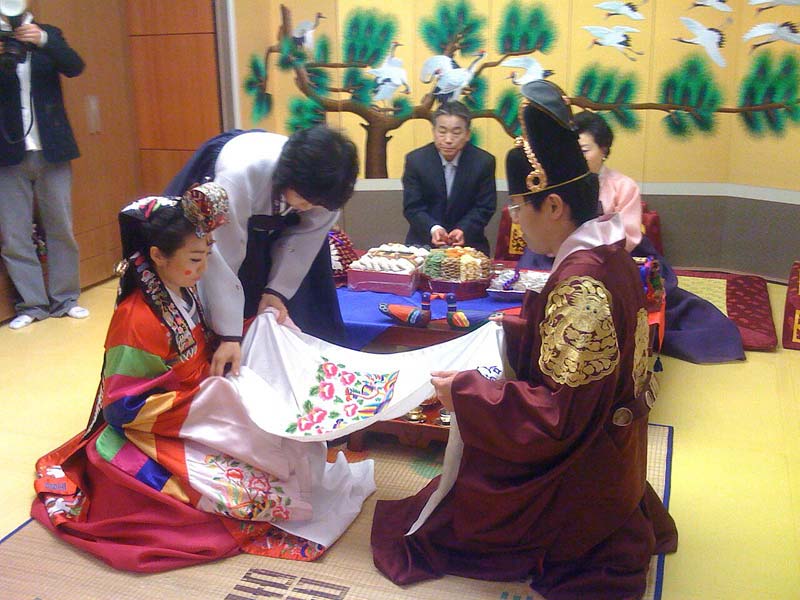
Honrye, the traditional Korean wedding ceremony, symbolizes the sacred union of two individuals, forging a new family that binds their lineages in harmony and mutual respect. Rooted in Confucian principles of equality and familial duty, Honrye emphasizes a partnership where husband and wife stand as equals, exchanging politeness and support. Performed with solemnity and joy, this intimate rite typically involves close family members and, in modern times, occurs a few days after the official legal or civil ceremony, though historically it was the central event. As Korean society evolves, Honrye adapts, blending ancient customs with contemporary influences from urbanization, religion, and global culture, yet it retains its core message of enduring partnership and ancestral blessing.
Historical and Confucian Foundations
The origins of Honrye reflect Korea’s adoption of Confucianism during the Joseon Dynasty (1392–1910), when marriage became a cornerstone of social order and filial piety (hyo). Confucianism views marriage not merely as a personal union but as a ritual ensuring generational continuity and familial harmony. The ancient Chinese Liji (Book of Rites), known in Korean as Yegi, describes marriage rites as formalities to “receive the spouse,” with the term Hon derived from the traditional timing at sunset, symbolizing the transition from day to night and the merging of two lives. This text, a key guide to Confucian etiquette, influenced Korean customs, promoting equality in husband-wife relations: “When man and woman become a couple, the same level of treatment shall be exchanged between husband and wife.”
Yet, Korean Honrye developed distinctively from Chinese models. While Chinese rites like Ju-Rye (formal betrothal) and Ga-Rye (wedding feast) followed six standardized courses, Korean traditions comprised a unique sequence: Eui-Hon (proposal), Nap-Chae (birth chart exchange), Yeon-Gil (engagement gifts), Nap-Pye (bridal gifts), Dae-Rye (main ceremony), and U-Gui (post-wedding visit). This adaptation, despite Confucianism as state policy, embedded indigenous Korean spirit—emphasizing communal family involvement and practical simplicity—into the rites. Earlier influences from the Three Kingdoms period (57 BCE–668 CE) included shamanistic blessings for fertility, while Goryeo Dynasty (918–1392) Buddhism introduced symbolic exchanges of tea and fruits. Honrye thus became one of the “Four Ceremonial Occasions” (Gwanhonsangje), alongside coming-of-age, funerals, and ancestral rites, reflecting Korea’s unique cultural synthesis.
Equality and Politeness in Marital Tradition
At the heart of Honrye lies a progressive Confucian ideal: the equality of spouses, a value ahead of its time in patriarchal societies. The rites promote mutual respect, with couples addressing each other politely from the outset, fostering a partnership of shared responsibilities. During the ceremony, the bride and groom exchange bows of equal depth, symbolizing balanced reciprocity. This ethos counters rigid hierarchies, encouraging husbands and wives to treat one another as equals in decision-making and daily life. Such principles remain relevant, inspiring modern Korean couples to navigate gender roles with greater equity. The emphasis on politeness extends to family interactions, where in-laws offer blessings without dominance, reinforcing the new family’s autonomy while honoring ancestral ties.
Ceremony Procedures
Honrye unfolds through a series of interconnected stages, each rich in symbolism, culminating in the Dae-Rye, the core nuptial rite where the couple bows before ancestors and each other. These rituals, steeped in tradition, weave together family bonds, ancestral blessings, and the promise of a shared future, with food and gifts playing a central role in expressing prosperity and unity.
The process begins with Eui-Hon, the proposal phase, where families, often through a matchmaker, inquire about the other’s character, education, and background to ensure compatibility. Once both sides agree, they exchange letters of commitment—a proposal from the groom’s family and acceptance from the bride’s—formalizing the marital alliance with sincerity and care. Next, Nap-Chae, or the “four pillars,” involves the groom’s family sending a letter detailing his birth date and hour, reflecting East Asian cosmology to confirm astrological harmony. Acceptance by the bride’s family propels the process forward, affirming the union’s auspicious foundation.
Following this, Yeon-Gil sees the groom’s family offering engagement gifts—silk fabrics, jewelry, or fruits—to seek ancestral approval and express goodwill. The pivotal Nap-Pye follows, where the groom’s family delivers the bridal chest, or ham, a lacquered box symbolizing prosperity. At the groom’s home, relatives gather before a flower-patterned mat and folding screen. A ceremonial table, draped in cloth, holds marriage documents, blue and red fabrics (representing sky and earth), white gold or cloisonné rings, thread for binding fates, and simple gifts. The groom’s father completes the marriage paper, while his mother stitches the fabrics, arranging them carefully in the ham before sealing it with a belt. Note: A diagram or photograph of the ham and its contents could visually clarify the arrangement of these symbolic items.
At the bride’s home, a similar setup awaits: a screen, mat, and cloth-covered table with an earthenware vessel draped in blue-red fabric. When the ham arrives, it is placed atop the table or vessel; the belt is untied, the cloth removed, and the bride’s father reads the marriage paper aloud, affirming acceptance. Historically, a trusted servant (Hamjin-Abi) carried the chest discreetly, but today, the groom and friends often deliver it quietly, blending tradition with modern intimacy.
The Dae-Rye, the wedding proper, unfolds at the bride’s home. The groom, in ceremonial robes, arrives to perform bows: first to the bride’s parents, then to heaven and earth, and finally to the bride, who enters veiled in red and blue silk. Ancestral tablets receive offerings of rice wine (cheongju), fruits, and chestnuts, symbolizing fertility. The couple exchanges rings and sips from the same cup, signifying shared destiny. A feast follows, featuring tteok (rice cakes) for prosperity, red bean soup to ward off evil, and soju for toasts, with pairings like dates and chestnuts invoking hopes for many children. The ceremony concludes with U-Gui, where the bride visits the groom’s home days later, bearing gifts and integrating into her new family, reinforcing familial bonds.
Modern Significance and Adaptations
In contemporary Korea, Honrye has transformed amid rapid modernization, yet it remains a cultural touchstone that balances tradition with evolving societal values. Western-style white weddings, often held in hotels with gowns and tuxedos, dominate urban settings, but many couples incorporate Honrye elements, such as the paebaek bowing ceremony or the Nap-Pye chest, to honor their heritage. Legal marriages typically precede traditional rites, with family-only gatherings emphasizing intimacy over spectacle. Christian influences introduce church vows, while globalization inspires destination weddings, and economic factors simplify gift exchanges, reflecting Korea’s dynamic cultural landscape.
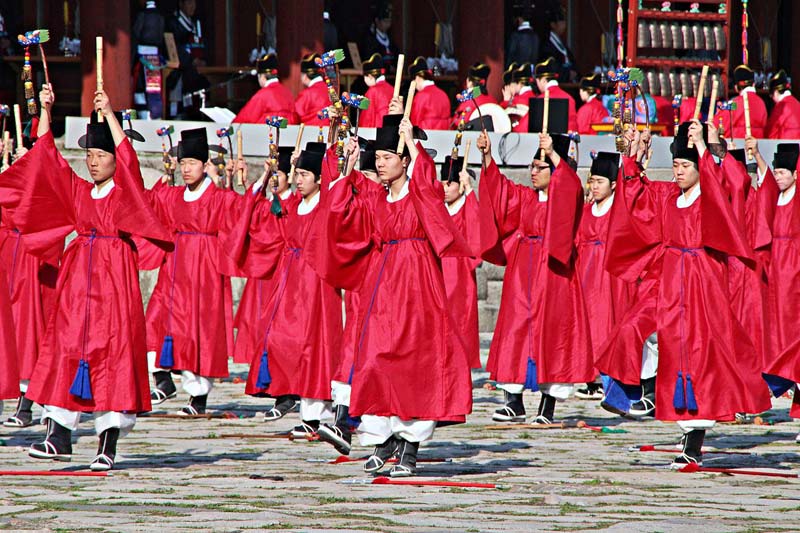
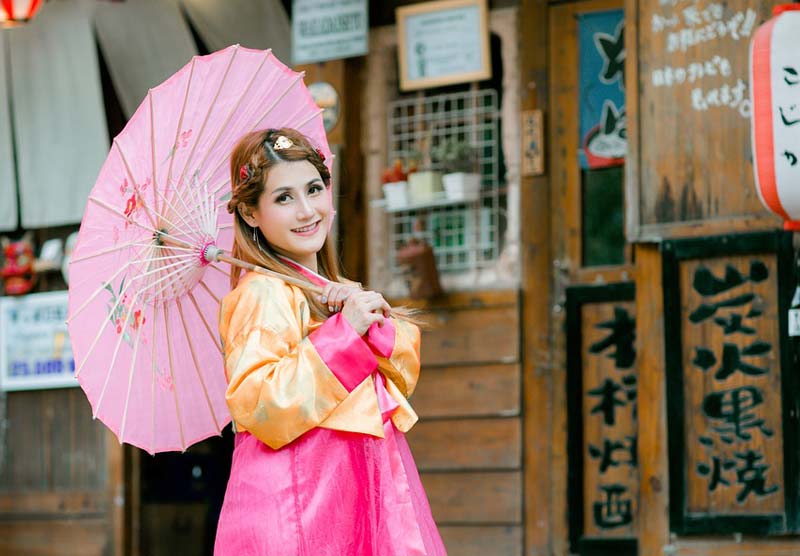
A notable trend is the “pre-wedding photoshoot” (sajin kyeolhon), where couples don hanbok for elaborate photos, merging tradition with social media aesthetics. Amid low birth rates and shifting gender norms, Honrye’s emphasis on spousal equality resonates strongly, encouraging modern couples to build egalitarian partnerships. As part of Korea’s intangible heritage, indirectly linked to UNESCO-recognized rites like Jongmyo Jerye, Honrye reinforces family bonds and national identity. Far from being a relic, it adapts to affirm love and commitment in a changing world, reminding couples of the timeless values of respect, unity, and ancestral connection that continue to shape Korean society.